If you want to search for something on Google, would you prefer typing disconnected keywords or simply entering full, natural-language questions? Of course, the latter. Nowadays, no one wants to waste time contemplating what to type to get the exact answer.Are you still focusing primarily on improving your SERP ranking? It won’t save you anymore. As more consumers seek fast and conversational answers, they are increasingly turning to popular AI assistants, including ChatGPT, Claude, Gemini, and others.This shift has changed the way we create content. Instead of just writing blog posts or choosing the right keywords, we need to consider how large language models understand and display information. This is where LLM SEO plays a significant role.
This comprehensive guide will help you learn what LLM SEO is and why it matters. Whether you are new to SEO or just want to stay updated with the latest, it’s the best place to start.
Understanding LLMs Without The Technical Difficulties
Your Language Buddy
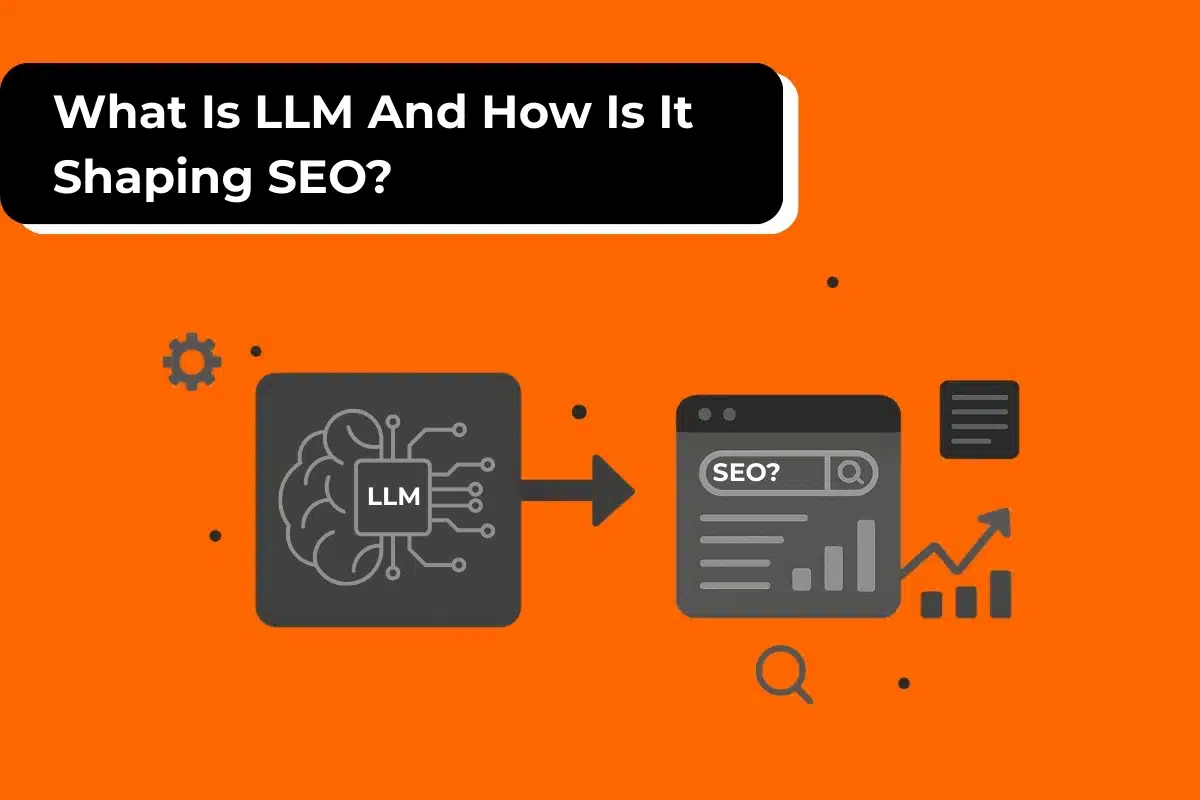
Need guidance for your assignments? Want to learn and explore the world? LLM is your smart language buddy. In simple terms, LLM stands for Large Language Model, which grasps information from articles, books, and other material that people write. They make the best use of this knowledge to respond in a helpful way.
Based on Deep Learning AI
You can also say that LLM is a type of AI that breaks down a large amount of information and complex algorithms into understandable and human language. Based on deep learning, a special kind of AI, these LLMs typically work the way your brain functions when learning.
Text, Speak, or Code
Simply text, speak, or enter any code, and LLMs can read and understand. They acknowledge your query, respond in the most relevant way, and refine the language to match your tone and style.
Send a Prompt
Need a humanized text? Enter a prompt and expect a humanized essay or a story out of it.
In essence, LLMs are those unbelievable language models that make use of AI and other information to understand the query and generate human language. These are the result of immense research in artificial intelligence, computational linguistics, and mathematics. It goes without saying that LLMs have now blurred the boundaries between human expression and machine generation.
Why Search Engines Are Increasingly Powered By LLMs
For decades, the search was all about keywords – match the user queries with indexed text. It was fine for static content, but it couldn’t capture the real intent. Now, LLM-powered search engines that make use of models such as GPT-4 or Gemini come up with an altogether different strategy.
Instead of just analyzing the keyword density and backlinks, these LLMs now rely on semantic understanding. It’s about knowing the meaning behind the query. They just don’t provide consumers with simple lists of links, but understand the relationship between concepts, change the user tone, and provide humanized answers. The key is that the search should sound like a conversation rather than a command.
Notably, the LLM-powered search not only improves the user experience but also impacts the business economy –
Smarter Customer Discovery
Search engines powered by LLM can now understand what customers mean rather than just what they are typing. They can simply convert the intent and come up with the right options quickly.
Higher conversion rates
As more customers can now find the right product in no time, it leads to higher conversions and fewer empty carts.
Reduced customer support cost
It has taken over the role of the support team, as the AI assistants can now easily respond to the queries.
Tap into valuable insights.
It also benefits the internal teams as the employees can now dig deep into the unstructured content to find the most valuable insights.
So, LLM-powered search engines are already here, and the businesses have warmly accepted them. Needless to say, they are more accurate and offer a more user-friendly search experience – the benefits you can’t overlook! For businesses, the question is never about whether to adapt to this shift; it’s about how fast they can. It opens doors to better engagement and enhanced productivity.
Type a question into Gemini, and you will get the direct answer – no scrolling, no list of links. Now that we have an insight into how LLMs work, let’s move to how they change the way people search.
How LLMs Are Changing The Way People Search
LLMs are truly reshaping how people search. From scrolling and searching multiple websites to get information to searching on chat platforms, the customers have come a long way. Let’s start with how the search is being changed –
Conversational Queries – A New Normal
There are two significant shifts in how users search, thanks to the assistants driven by LLM –
Conversation with a human touch
With LLMs, the search process has never been easier! Simply ask a natural language question, and LLMs will grasp all the criteria in no time, remember that, and come up with a refined answer.
Summary followed by the links
When you enter a search query, Google AI Overviews present a relevant summary at the top of the page, followed by a list of links. Studies indicate that the organic result’s CTR may reduce approximately by 34% if an AI summary is present.
In other words, you get your answers in one go. Undoubtedly, the default search behaviour has changed from typing and scrolling links to asking queries and getting an instant response. With the rising fame of LLMs, consumers now use both traditional search engines and AI chatbots to get the exact answers they expect.
Let’s dive into the difference between traditional SEO and LLM SEO.
LLM SEO Vs Traditional SEO: What’s the Difference?
You did your best to optimize your website, added the right keywords, meta tags, and did link building, in the hope of ranking higher on the search page. Still, no results. Static traffic and sales stand still. This can be challenging. But what went wrong? It’s not your fault. You are just not updated with the changing rules of search engines. The old-school SEO tricks called traditional SEO no longer work the same. You need to embrace LLM SEO.
Traditional SEO
It’s all about making your website easy to understand for search engines like Google. Let’s check what you do with traditional SEO –
- Use the right keywords throughout the content
- Add meta tags
- Add backlinks
- Page speed optimization
- Check for mobile-friendliness
You just follow these steps to let search engines know what your webpage is all about. Google matches the words searched by the users with your keywords and displays your page if it is suitable.
LLM SEO
LLM SEO emphasizes making your site understandable not only for Google but also for the tools powered by AI. As more consumers rely on these tools to ask queries and get relevant and instant answers, it’s crucial to structure your content in a way that AI can easily understand. Let’s cover what LLM SEO includes –
- Creating content that AI can understand easily.
- Answering complete user’s queries rather than just focusing on keywords.
- Providing clear and relevant explanations.
- Using conversational tone with natural and human touch.
So, when you ask for “How to Fix a Cracked Screen? “, your webpage will surface on the top if you’ve optimized it with LLM SEO. Now let’s dig deeper into what makes the difference–
Search
Traditional SEO:
- User types in “ Top Camping Places California.”
- Google matches those keywords to the relevant webpage.
LLM SEO:
- A user asks a natural-language query, “Which camping spots in California are worth visiting with the best reviews?”
- LLM-driven AI chatbots leverage your content to respond.
Content
Traditional SEO:
- Emphasizes keywords and short, crisp parts.
LLM SEO:
- Emphasizes conversational, complete answers.
Where Your Content is Visible
Traditional SEO:
- SERPs
LLM SEO:
- Used by AI chatbots, featured snippets, and voice assistants
How You Come on Top
Traditional SEO:
- Achieve a higher rank on SERPs with backlinks, keywords, and by fixing technical errors.
LLM SEO:
- Be the leading answer for LLM-driven AI tools by being clear and concise.
Content Creation In An LLM-Driven Search World
LLM optimization means personalizing your content so that it’s easy to read by LLMs Like GPT-4. If it does not align with how these LLM models work, your content might go invisible. In simple words, LLM optimization is about matching your content strategy with how AI models rank information.
Now, what makes your content truly LLM-friendly? The key is to improve the readability and semantic richness for the AI –
Make AI-friendly humanized content.
- Make sure that your content is written in a conversational tone and is clear.
- Instead of inserting keyword-stuffed sentences, cover every topic as if you are interacting with a human.
- If your content is well-read and answers the user’s query, bingo!
Create in-depth content
LLM prioritizes inclusive content that covers all aspects of your topic. Writing about a wide subject? Start with a thorough overview followed by the sections that dig deeper into subtopics. It not only makes your readers satisfied but also lets LLM consider your webpage a go-to place on that topic.
Prioritize context over keywords.
- Enhance the semantic richness of your piece of content by covering the context around the topic instead of just repeating the keyword.
- Not only this, but also address user intent.
It’s about considering why the user searches a particular query. Are they seeking just the definition, merits or demerits, or a how-to guide? Make sure that your content aligns with the intent perfectly.
Embrace E-E-A-T to build credibility.
Google’s E-E-A-T guidelines state that the content should showcase the experience and expertise of the creator while building authority and trust.
- Add relevant facts and data
- Add links to renowned sources
- show the expertise of your brand
A strong E-E-A-T not only increases your likelihood for the AI models but also improves traditional SEO. Mentioning your first-hand experience on the topic and adding case studies and expert quotes adds to building a strong E-E-A-T.
Follow these points to make your content more transparent and increase LLM readability. With the transformation in search behaviour, users now expect answers to appear instantly where they search. It’s time to own the zero-click moment.
Optimizing For AI Answers and Zero-Click Results
According to a 2025 report, a majority of US search queries ended in no clicks. With zero-click results as a new normal, it reveals how search is becoming more AI-driven and brief.
Zero-click visibility is achieved by a combination of SEO and AEO –
- While SEO optimizes your webpage for the keywords, Answer Engine Optimization(AEO) finds the direct answers to the human language questions.
- SEO improves the readability and structure of the content, while AEO leverages schema markups such as FAQs and How To.
- SEO helps search engines know your site, while AEO assists AI models in retrieving the exact information.
Overall, both SEO and AEO work together to get zero-click visibility. Now that you know zero-click is trending, you can get your website included in zero-click responses by optimizing for AEO, improving the structure of your content, and strengthening E-E-A-T signals. In the next section, let’s cover why LLM E-E-A-T trust building is the core of SEO.
The Role of E-E-A-T In An LLM-Based Search Era
If you think that Experience, Expertise, Authoritativeness, and Trustworthiness are just Google’s structured framework, you need to rethink. They have now become the core of how LLMs choose which brand to trust.
Since there is no ranking page to display, how can you build trust? This is where the businesses nowadays invest –
Latest, Structured Content
- Make sure that the facts you use in your content are latest than the AI’s training data.
- Your headings should be clear with FAQs and schema markup.
Link to other sources
- Link your content to other reliable sources when required.
Show credentials
- Add real names with credentials.
- Also, add bio and links to expert profiles.
Ensure your data is original.
You just can’t get away with rephrasing what’s already online. Do your research and take fresh takes to earn citations.
Although LLM E-E-A-T trust building sounds scary, it’s a great opportunity. Building trust gives you more visibility than you can ever have with traditional SERPs. Once you stay ahead, you are always at the top of mind, even when the user stops searching on Google.
In this AI-powered future where trust, connection, and engaging content matter the most, let’s see how to prepare your SEO strategy to stay ahead.
Preparing Your SEO Strategy For An AI-Powered Future
The key to winning in the age of AI search is making an SEO structure that emphasizes best practices. Let’s delve into the fundamentals of a future-proof SEO strategy –
Hire an Expert in Technical SEO
Aim for a quick, safe, and mobile-friendly site. If your site has technical issues, even the smartest AI can’t track you. AI search engines identify your site by crawling and indexing.
Technical issues such as broken links, slow loading, or crawl errors can prevent your content from being read easily. Hire an expert in technical SEO who can regularly audit and work on maintaining the health of your site.
Prioritize High-Quality Content
AI search emphasizes high-quality, reliable, and relevant content.
- Forget about keyword stuffing and focus more on adding valuable insights.
- Your content must answer real queries in human language.
- Consider how the users can phrase their queries in a conversation with an AI assistant.
In a nutshell, structured information, clear headings, and meaningful summaries can assist AI models in reading and surfacing your content.
Backlinks from credible websites
- AI search also checks if any other website highlights you as a credible source.
- Backlinks from reliable websites can build trust more effectively.
- Your content must be link-worthy – original with helpful tools.
Remember, in this AI era, trust is the key.
Evidently, AI is changing the search dynamics. However, it doesn’t mean SEO is dead. It’s just that the shortcuts no longer work. A well-structured website with impactful content always wins, regardless of how the search engines change.
Also Read: Mastering Topical Authority: The Real Secret to Owning Google’s Ranking
Final Thoughts
In the world of digital discovery, SEO is beyond satisfying the search engines. It’s about making a user experience that both humans and AI acknowledge. The introduction of LLM SEO has completely transformed how AI understands your brand, your expertise, and your relevance. Quite frankly, AI is progressively becoming a significant factor in how your content is assessed and surfaced.